


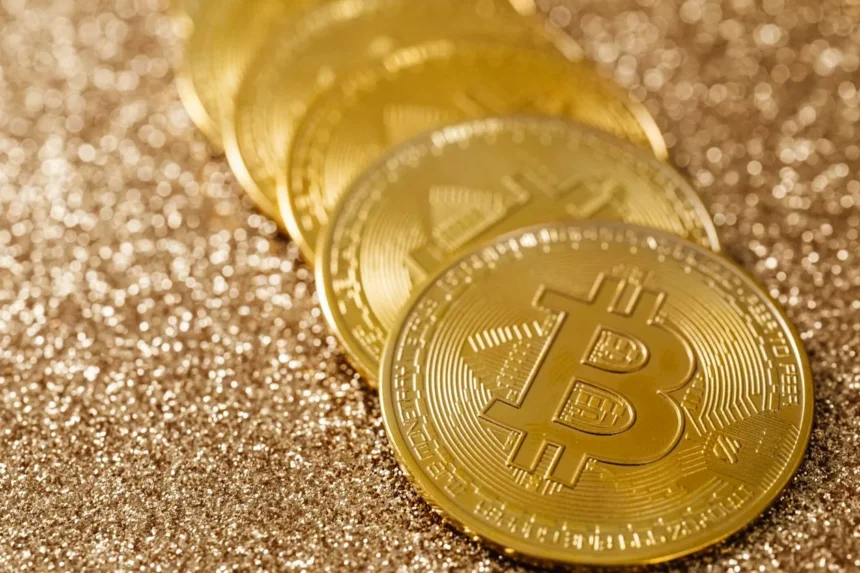
There is a tidy way to summarise a messy financial revolution: the world is buying digital dollars, and America is buying Bitcoin. Stablecoins — crypto tokens pegged to the US dollar — have spread through emerging markets as a practical tool for saving and payments. At home, American institutions have embraced Bitcoin as a scarce, speculative and increasingly mainstream asset. Neither trend needs exaggeration to be important; both are reshaping how value moves across borders.
Seen from an everyday-money perspective, the lesson is to separate tools from tokens. A stablecoin is a tool: useful for payments and short-term saving, and only as trustworthy as its reserves and issuer. Bitcoin is a token: an asset whose value rests on scarcity and belief, capable of sharp rises and falls. Confusing the two is how beginners get hurt.
Stablecoins: the dollar, exported by software
A stablecoin is a crypto token designed to hold a steady value, usually one US dollar. Major issuers back their tokens with reserves of cash and short-term US government debt, and allow holders to redeem tokens for dollars. Because the tokens move on blockchains, anyone with a phone can receive, hold and send dollar value in minutes, without a US bank account. For people living with inflation or capital controls, that is not a novelty; it is a financial lifeline.
Why the world wants digital dollars
Demand for stablecoins is strongest where local money is weakest. Freelancers price their work in them, importers pay suppliers with them, families receive remittances through them, and savers park value in them when inflation erodes local deposits. Researchers at institutions such as the Bank for International Settlements and the International Monetary Fund have tracked this growth closely, noting both the convenience for users and the questions it raises for monetary policy in smaller economies. Our earlier coverage, Measles Symptoms and Vaccine Advice as US Cases Rise, shows how quickly expectations around young people and technology are already shifting.
Bitcoin: the scarce asset America keeps buying
Bitcoin runs the other way. Its supply is capped by code at 21 million coins, issued on a schedule that slows over time — a design meant to mimic the scarcity of a commodity. American demand, through exchanges, funds and corporate buyers, has made the United States the centre of gravity for Bitcoin investment. Supporters see digital scarcity as a hedge against currency debasement; sceptics see a volatile asset with no cash flows. Both descriptions capture part of the truth.
Liquidity out, scarcity in
Put together, the flows describe a new kind of financial geography. Dollar liquidity — stable, spendable, reserve-backed — flows outward to the world’s phones. Digital scarcity — fixed in supply and priced by markets — flows inward to American portfolios. The arrangement even loops back on itself: stablecoin reserves parked in Treasury bills help fund the US government, while American financial firms earn fees from both directions of the trade. For background, see Bank for International Settlements.
A balanced way to read the trend
None of this requires hype, and none of it justifies price predictions, which this article deliberately avoids. Stablecoins carry issuer and regulatory risk; a peg is a promise, and promises should be audited. Bitcoin carries market risk; scarcity does not guarantee value, only limited supply. What is genuinely new is the infrastructure: money and assets that move globally, around the clock, on shared software. That infrastructure will keep developing whichever individual tokens thrive.
What households should take away
For ordinary savers, the practical lessons are modest ones. Learn what a stablecoin is before using one, and check who issues it and what backs it. Treat Bitcoin, if you hold it at all, as a volatile asset rather than a savings account. And notice the direction of travel: money is becoming faster, more digital and more global, whether issued by a central bank, a technology company or a network of computers. Planning calmly for that world beats chasing it.