

Some health advice demands a gym membership, expensive equipment or a personality transplant. This piece requires none of those — only ten minutes and a pavement. A growing body of research suggests that a gentle walk taken shortly after eating is one of the most effective small habits a person can adopt, with measurable effects on blood sugar, digestion, energy and mood.
The idea is not new. Several cultures have proverbs celebrating the post-meal stroll, from the Italian passeggiata to the Chinese saying that walking a hundred steps after dinner helps you live to ninety-nine. What is new is the data: wearable glucose monitors have let scientists watch, in real time, exactly what a short walk does to the sugar spike that follows a meal.
What the science shows
When you eat, glucose from your food enters the bloodstream. Working muscles soak up glucose without needing much insulin, so walking after a meal literally pulls sugar out of circulation. Studies comparing people who walked for even two to five minutes after eating with people who stayed seated have found meaningfully lower and smoother glucose curves — and the benefit grows with a ten-to-fifteen-minute stroll.
This matters well beyond people managing diabetes. Large, repeated glucose spikes are associated with energy crashes, cravings and, over years, metabolic wear and tear. The World Health Organization recommends regular physical activity for all adults, and researchers increasingly emphasise that short bouts scattered through the day — sometimes called exercise snacks — count toward those goals. Guidance from institutions such as Harvard Health echoes the point: consistency beats intensity for most people.
Digestion, sleep and mood come along free
Walking gently stimulates the gut, which is why an after-dinner stroll so often relieves that heavy, bloated feeling better than collapsing on the sofa. An evening walk adds two more bonuses: daylight or dusk light helps anchor the body clock, and the mild exertion tends to improve sleep quality later that night.
Then there is the mental side. A short walk is a natural break in the evening — a chance to talk with family, phone a friend, listen to music or simply think. Participants in habit studies frequently report that the walk becomes the part of the routine they would least like to give up, which is precisely why it sticks when more ambitious exercise plans fail.
How to make it a habit
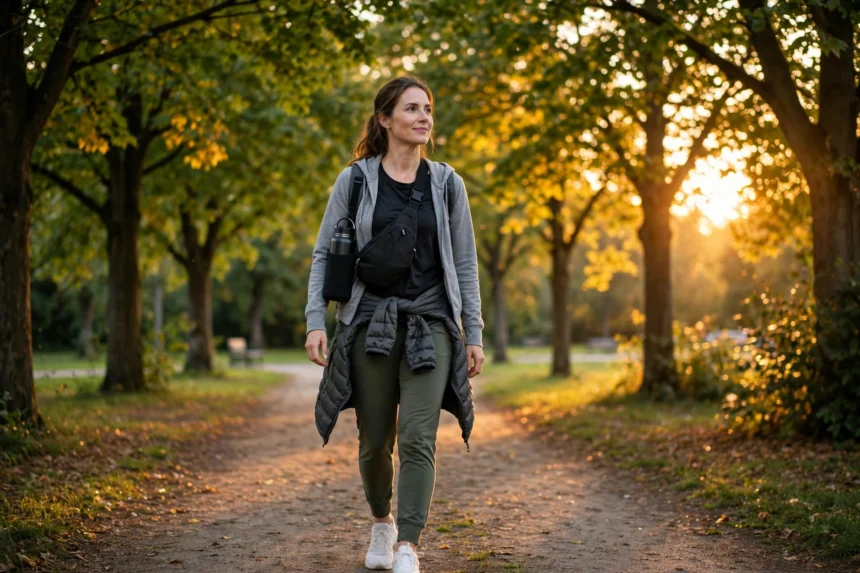
The rules are forgiving. Walk within half an hour or so of finishing your meal, keep the pace conversational rather than athletic, and aim for ten minutes — roughly a thousand steps. Attach it to an existing cue: clear the table, then walk. Choose a loop from your front door so there is nothing to plan, and keep comfortable shoes by the door to remove friction.
Who stands to gain the most
Almost anyone can benefit, but a few groups stand out. Desk workers, who often sit for ten or more hours a day, break up dangerous sedentary stretches with very little effort. Older adults gain gentle, joint-friendly movement that supports balance and independence. And people watching their blood sugar — including the large and growing number with prediabetes — get a tool that works after every single meal, not just on gym days.
A sensible caution: keep it gentle. A brisk hike or run immediately after a large meal can cause stitches or indigestion, because the body is busy digesting. The research benefits come from light-to-moderate walking, the kind where conversation is easy. As with any change, people managing a medical condition should check with their doctor — but for most of us, the prescription could hardly be simpler: eat, then amble.
If ten minutes feels impossible on a given day, take three. The research suggests even brief post-meal movement beats none, and a habit done imperfectly is worth far more than a perfect plan abandoned by February. In a wellness world of ice baths, supplements and subscriptions, the humble after-dinner walk may be the best deal going: free, pleasant, and quietly powerful. For more lifestyle and wellbeing stories, visit Stella Dimoko Blog.