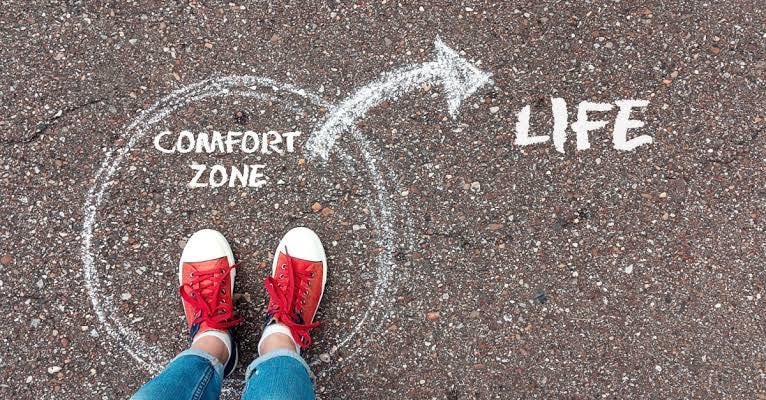
The web offers endless options, yet most people move in loops. The same few sites get revisited, the same buttons get tapped, and familiar paths win out even when better choices exist. That pattern isn’t always loyalty. It’s the brain saving effort. Familiarity bias pushes users toward what feels known because it’s faster and less mentally expensive. In high-attention moments, a cue like desi win login can feel less like a query and more like a shortcut to instant access. This bias can save time and prevent errors, but it also narrows choices and makes lookalike traps easier to miss.
When Familiarity Replaces Evaluation
The mind naturally tries to spend as little effort as possible. Comparing choices, scanning small print, and thinking through risk all require focus. Spotting something recognizable is cheaper. When a site looks familiar – the same layout, colors, or button positions – it often gets labeled as “safe” and “fast” without much thought.
That’s how familiarity can beat careful judgment, even when the decision matters. The choice isn’t always the best option. It’s often the easiest one to complete. Online, where attention is constantly interrupted, getting something done can feel more important than analyzing it.
Familiarity also brings predictability, and predictability feels like control. If something worked before, repeating it seems logical, even if the rules or risks have quietly changed. The brain assumes things stayed the same unless something clearly signals otherwise.
That assumption is useful in daily life. In digital spaces, it can become a blind spot.
Habit Loops Built by Interfaces
Interfaces are not neutral. They train behavior. Every time a user completes a task smoothly, the brain learns a pattern. The next time, it follows the same path with less thought. Over time, the behavior becomes automatic.
Design choices amplify this. Stable navigation, consistent icons, and predictable feedback reduce cognitive load. That makes products feel “easy,” but it also builds dependence on familiar patterns. Even small shifts in layout can create discomfort because they break muscle memory.
Many habit loops are built around the same cycle. Trigger, action, reward. A notification triggers curiosity. A tap opens the familiar site. The reward is an update, a confirmation, or a result. Repeating this loop reinforces the belief that the familiar path is the correct one.
This is also why people may feel irritated when asked to “try something new.” The frustration is not only preference. It is the cost of relearning a workflow that the brain has already automated.
High-Pressure Moments Amplify Familiarity Bias
Time pressure changes how decisions are made. Under urgency, the brain trims anything that feels optional. Comparison becomes optional. Verification becomes optional. Speed becomes the priority.
High-attention moments create this pressure even without a deadline. A live event, a trending clip, a sudden message from a friend. These moments narrow focus and push behavior toward the fastest known route. The brain wants resolution, not exploration.
This is why people often return to the same sites during spikes of interest. Familiarity reduces friction when attention is already stretched. The cost of a wrong click feels lower than the cost of missing the moment.
Trust Without Verification
Repetition creates trust, even when that trust is not earned through deliberate evaluation. If an action has not caused harm before, the brain interprets it as safe. That is a practical rule in many parts of life. Online, it can be misleading.
Trust can form based on interface cues rather than real security. A clean design, a familiar color scheme, a button in the expected place. These signals can feel like proof. In reality, they can be copied. Lookalike pages and deceptive domains rely on this gap between perceived safety and actual safety.
Familiarity bias also reduces the chance that people notice small changes. A subtle typo in a URL. A different login step. A new pop-up. When the mind expects the usual experience, it fills in missing details. It sees what it expects to see.
A safer approach is not constant suspicion. It is selective verification at key moments. Logins, payments, permission requests, and downloads deserve a second look because the cost of error is higher.
Breaking the Loop Without Forcing Change
Familiarity has benefits. It saves time. It reduces decision fatigue. It can help people function smoothly in a noisy digital world. The goal is not to abandon familiar paths. The goal is to recognize when familiarity is making the decision instead of supporting it.
Small habits can reduce the downside without creating extra stress. A fast mental check of the domain before entering credentials. Using bookmarks for important sites rather than searching each time. Paying attention to unusual permission prompts. Noticing when the interface suddenly looks “almost right,” rather than exactly right.
Familiarity bias becomes risky when it is invisible. Once it is named, it becomes easier to manage. The most useful shift is moving from automatic clicking to intentional clicking in the moments that matter most.