

Choosing the right National Disability Insurance Scheme (NDIS) plan management option is an important decision for participants and their families. The way an NDIS plan is managed can influence how providers are paid, how services are organised and how much control participants have over their funding.
Two common options are plan management and self-management. Both allow participants to use their NDIS funding to access approved supports, but the responsibilities and administrative requirements are different.
Some families prefer having professional assistance with invoices and payments, while others want greater control over their budgets and provider arrangements. Understanding these differences can help participants choose an option that suits their circumstances, confidence and support needs.
There is no single management option that works for everyone. The right choice depends on how involved participants want to be in managing their funding and how much administrative responsibility they are comfortable handling.
Understanding Plan Management and Self-Management
Before comparing the two options, it is useful to understand what each management arrangement involves.
Plan Management
Under plan management, an NDIS-registered plan manager helps participants manage the financial administration of their NDIS plan. This includes processing provider invoices, managing payments and providing information about available funding.
The participant still makes decisions about which supports and providers they want to use, within the rules of their plan.
Families looking into NDIS plan management in Wollongong can consider this option if they want assistance with financial administration while maintaining choice and control over their supports.
Self-Management
Under self-management, the participant or their nominated representative takes responsibility for managing the NDIS funding directly.
This involves receiving and paying invoices, keeping financial records, monitoring budgets and ensuring that spending follows NDIS requirements.
Self-management provides greater flexibility, but it also requires more time, organisation and understanding of the relevant responsibilities.
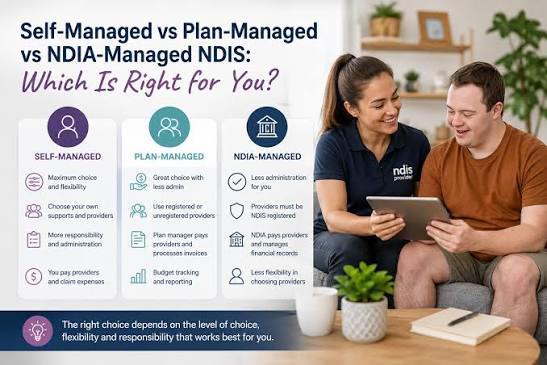
Key Differences Between Plan-Managed and Self-Managed NDIS
Both options provide participants with control over their support arrangements, but the way financial responsibilities are handled is different.
| Feature | Plan-managed | Self-managed |
| Invoice processing | Plan manager processes provider invoices. | Participant or nominee manages invoices. |
| Payment administration | Plan manager handles payments. | Participant or nominee arranges payments. |
| Budget monitoring | Plan manager provides funding information and statements. | Participant monitors the budget and spending. |
| Financial records | Plan manager maintains relevant financial records. | Participant maintains records. |
| Provider choice | Participants can generally use registered and unregistered providers, subject to NDIS rules. | Participants can generally use registered and unregistered providers, subject to NDIS rules. |
| Administrative responsibility | Shared, with the plan manager handling financial administration. | Participant or nominee takes responsibility. |
| Management fees | Plan management funding is included in the plan when approved. | No separate plan management service is required. |
The main difference is who takes responsibility for managing the financial administration of the plan.
1. How Does Plan Management Work?
Plan management provides participants with professional assistance to manage the financial side of their NDIS plan.
Once plan management is included in the participant’s plan, a plan manager can receive invoices from providers, check relevant details and arrange payments using the available funding.
This can reduce the amount of administration families need to handle themselves.
Common plan management responsibilities include:
- Receiving and processing provider invoices.
- Paying approved provider invoices.
- Monitoring available funding.
- Providing financial statements.
- Identifying potential budget concerns.
- Helping participants understand their plan expenditure.
Participants remain responsible for choosing their providers and deciding which supports best suit their goals.
2. How Does Self-Management Work?
Self-management gives participants or their nominated representatives direct responsibility for managing their NDIS funding.
Instead of relying on a plan manager to process payments, participants manage the financial arrangements themselves.
This can involve:
- Receiving invoices from service providers.
- Checking invoices before payment.
- Paying providers directly.
- Maintaining receipts and financial records.
- Monitoring available funding.
- Keeping track of spending against the plan budget.
- Meeting relevant NDIS reporting requirements.
Participants who prefer managing their own finances may appreciate the flexibility of this option.
However, families should understand the responsibilities involved before choosing self-management. Good record-keeping and regular budget reviews are important for avoiding administrative problems.
3. Which Option Provides More Flexibility?
Both plan management and self-management provide flexibility when choosing supports and providers.
Under plan management, participants can generally access both NDIS-registered and unregistered providers, provided the supports comply with the relevant NDIS requirements.
Self-managed participants also have flexibility when selecting providers. They can negotiate service arrangements and manage payments directly.
The difference is mainly in the financial administration rather than the level of choice available.
Families should consider the type of providers they want to use and whether they prefer managing payments themselves or receiving assistance from a plan manager.
4. Which Option Requires Less Administration?
Administrative responsibilities are an important consideration for families already managing appointments, support arrangements and everyday commitments.
Plan management can reduce the administrative workload because the plan manager handles invoice processing, payments and financial reporting.
Self-management requires participants or their nominees to manage these responsibilities independently.
This may involve setting aside time to review invoices, organise payments, maintain records and monitor spending.
Families with limited time or those who prefer professional financial administration may find plan management more convenient.
5. Understanding the Costs of Each Option
The financial arrangements are different for plan-managed and self-managed participants.
With plan management, funding for the plan management service is generally included in the participant’s NDIS plan. It is separate from the funding allocated for other supports.
Self-managed participants do not need a separate plan management service because they manage their own financial administration.
However, self-management still requires time and effort. Participants should consider the administrative responsibilities involved rather than comparing the options based only on service fees.
6. How Much Control Does Your Family Want?
Control over funding is another important consideration when choosing between the two options.
Self-management gives participants or their nominees direct responsibility for handling payments and monitoring expenditure.
Plan management allows participants to retain control over their support choices while delegating financial administration to a professional plan manager.
Families should consider who will be responsible for managing the plan and whether that person has the time and confidence to handle the financial tasks.
The decision should reflect the participant’s preferences, goals and individual circumstances.
7. Can You Change Your NDIS Management Option?
NDIS participants can request changes to their plan management arrangements when their circumstances or preferences change.
For example, someone who initially chooses self-management may later decide that professional assistance with financial administration would be helpful.
Similarly, a participant who currently uses plan management may wish to explore self-management if they become more comfortable handling their own funding.
Changes depend on the relevant NDIS processes and plan arrangements. Participants can discuss their options with their NDIS contact or support coordinator, where applicable.
Which NDIS Management Option Is Right for Your Family?
The right option depends on how much administrative responsibility your family wants to manage and the level of assistance required.
Plan management may suit families who:
- Want professional assistance with invoice processing.
- Prefer not to manage provider payments themselves.
- Want help monitoring available funding.
- Would like financial administration support while retaining provider choice.
- Have limited time to manage NDIS paperwork.
Self-management may suit participants or families who:
- Feel confident managing their own finances.
- Want direct responsibility for provider payments.
- Can maintain accurate financial records.
- Have time to monitor budgets and expenditure.
- Prefer handling administrative responsibilities independently.
Families should also consider whether the participant has someone available to help with financial administration if their circumstances change.
Final Thoughts
Choosing between plan management and self-management is an important part of making an NDIS plan work effectively. Both options allow participants to maintain choice over their supports, but they involve different levels of financial responsibility.
Plan management provides assistance with invoices, payments and funding information, while self-management gives participants or their nominees direct control over financial administration.
Families should consider their available time, confidence with financial tasks, preferred provider arrangements and individual support needs before making a decision. Understanding these differences can make it easier to choose an approach that supports the participant’s goals and everyday requirements.